Give Yourself the gift of Your Own Body

Depression | Anxiety | Insomnia | Digestive Disorders
Menstrual Regulation | Pain Management
14 E 4th Street, Suite #604
New York, NY 10012
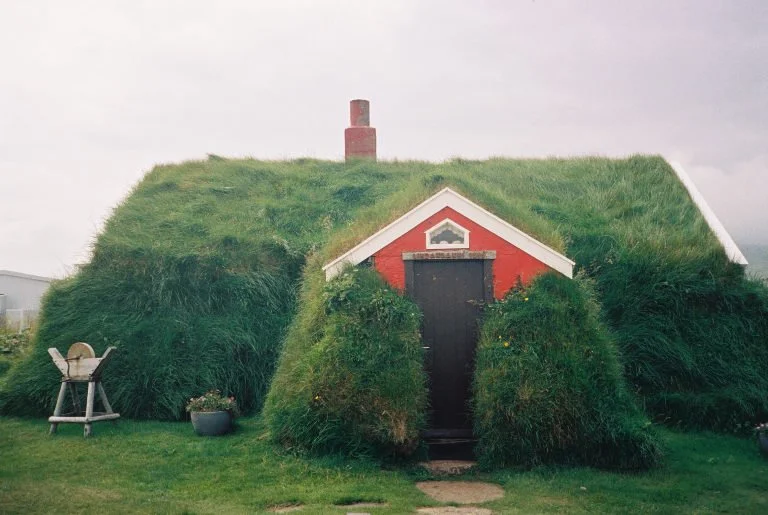
Icelandic torfbæir (turf house).
In modern society, we’ve come to view health as the absence of illness. And when illness inevitably comes knocking at our doors (or breaking through), that’s when we turn to medicine. Western biomedicine provides fast-acting, sometimes life-saving interventions in cases requiring emergency repair, but oftentimes exacts a toll. With limited solutions to address any condition between peak health and dire illness, we’re a society that has become overly-medicated, rife with increasingly chronic, iatrogenic (drug-induced diseases), and/or idiopathic (disease arising from unknown causes) ailments, begging the question: Has the quantity of life come at the cost of the quality of life?
Brought into the modern age, Chinese medicine integrates with Western biomedicine to synergize, ameliorate, or mitigate the effects of pharmaceuticals, surgeries, and other biomedical methods. However, Chinese medicine is more than “alternative” or “supplemental” — If we understand health as a continuum/spectrum and not just the absence of illness, Chinese medicine fleshes out this gap that Western medicine has left in the medical system. Originally, acupuncture, herbology, and adjunctive therapies (cupping, gua sha, moxibustion, Tai Ji, and Qi Gong) were used to prevent illness by attuning people to the changing seasons and aligning humans with the cyclical shifts of the universe. Organized by a holistic view of the human body, our paradigm recognizes not only the manifestations of disease but also stages of disease progression. We can provide early intervention before the illness becomes full-blown, much more challenging to reverse, or causes irreversible damage.

the body is not a machine — it’s a garden.
Unlike a machine, which is essentially a sum of its parts, the body is an ecosystem with its own biogeochemical cycles (e.g. respiration, dispersion, fermentation, circulation, purgation, etc.). Chinese Medicine methodology works in tandem with our body’s inherent wisdom to facilitate, regulate, and recalibrate existing mechanisms and bring us back to equilibrium. When we are in balance, we are supple, flexible, and resilient like bamboo. We bend when the wind blows and return to center. When we are out of balance, we are brittle, rigid, and fragile. Like a cedar tree, we will snap in a storm. And as we all know, life has many storms.
Many of us may not remember the last time we felt truly healthy. But it is never too late to find the road back home; and whether it’s a straight-shot or a labyrinth, I’ll be there with you every step of the way.
the body wants to be a home.
When rain penetrates the roof, the leak must be patched up. When the rafters develop rot, the damaged wood must be removed and replaced. And if the rot resides in a support beam, adjacent scaffolding must be taken down as collateral. At which point does the structure of the house start to collapse after so much repair?
But could there be a way to adjust the humidity? A way to keep the thermostat at a minimum temperature during the winter so that the pipes don’t freeze and burst? A way to facilitate the smooth flow of ventilation and prevent the need for invasive, often compromising repairs?
The goal of Chinese medicine is to bring the body back to (home)eostasis.
Fortunately, Chinese doctors have been observing, analyzing, and conducting clinical trials on these very questions for thousands of years. There’s a reason why the medicine has not only endured but thrived worldwide.

“Treating a person who is ill is like digging a well when one is already thirsty.”
— The Yellow Emperor’s Inner Classic